Aug 06, 2026
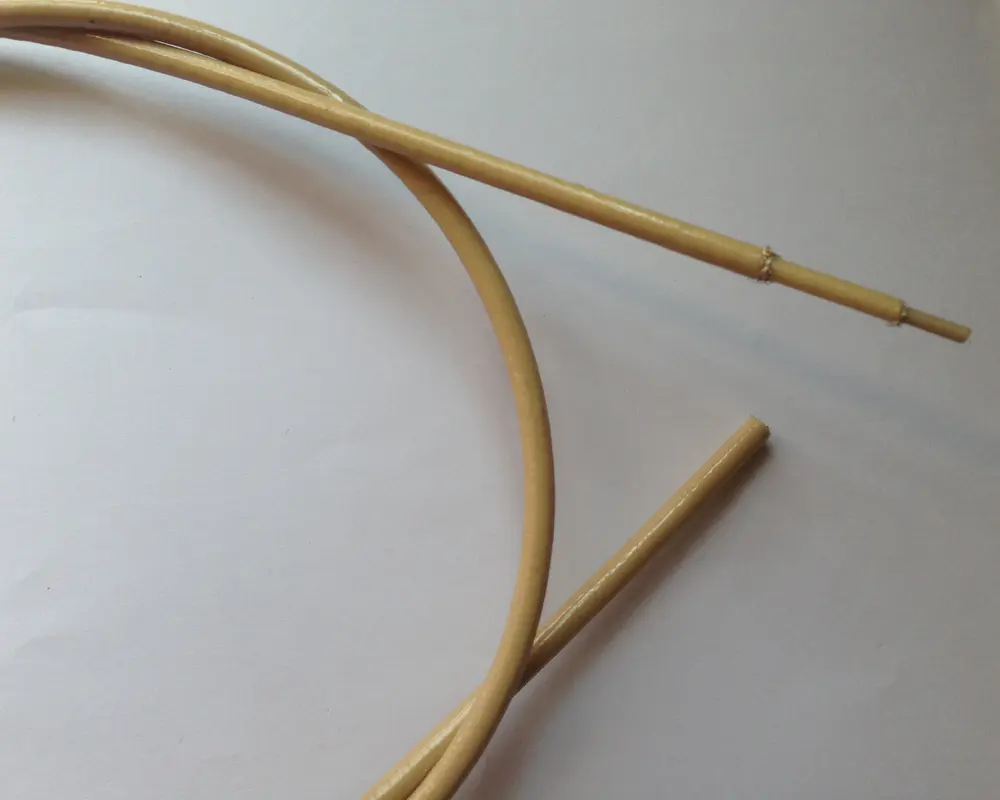
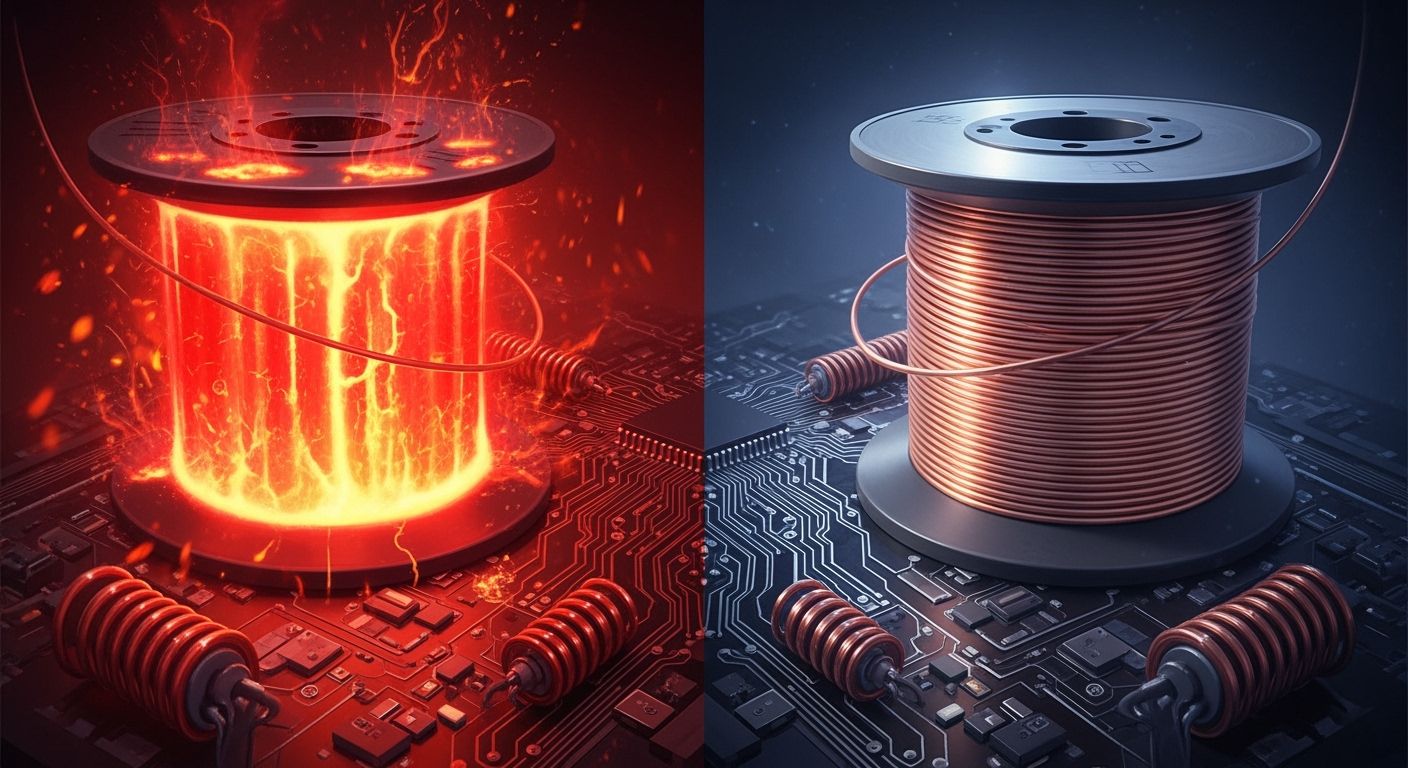
Le fil magnétique ultra-haute température 300 °C utilise une isolation en film de polyimide (PI) de pointe pour garantir un fonctionnement continu jusqu'à 300 °C. À l'inverse, les fils magnétiques standard utilisent des revêtements en émail organique, tels que le polyuréthane ou le polyester-imide. Ces revêtements conventionnels limitent la résistance thermique à des classes thermiques inférieures, entre 130 °C et 200 °C.Le fonctionnement de vos systèmes électromagnétiques au-delà de la température limite de fonctionnement des câbles compromet gravement la fiabilité à long terme du système. Les températures de fonctionnement excessives entraînent une fragilisation rapide de l'isolant des enroulements. Par conséquent, cette dégradation chimique provoque une grave défaillance diélectrique et des courts-circuits destructeurs. Il est impératif de spécifier des classes d'isolation appropriées afin de protéger les bobines fortement sollicitées contre la dégradation thermique et les pannes coûteuses. Points clés à retenirL'isolation avancée en film de polyimide permet au fil magnétique de résister à une chaleur extrême de 300 °C sans se détériorer.Les revêtements en émail standard se dégradent rapidement au-dessus de 120 °C et provoquent des courts-circuits électriques dangereux.L'isolation en polyimide empêche les pertes de puissance et assure le fonctionnement efficace des moteurs haute tension même sous contrainte extrême.Choisir un fil magnétique de 300 °C réduit les coûts de réparation à long terme et prévient les pannes catastrophiques d'équipement. Performances thermiques et chimie de l'isolationLes conceptions électromagnétiques hautes performances exigent une chimie d'isolation précise. Il est impératif de choisir une isolation de fil capable de résister à des conditions thermiques extrêmes tout en préservant son intégrité physique. Les fils magnétiques standard utilisent des revêtements en émail liquide. Les fabricants appliquent directement des polyuréthanes ou des polyester-imides liquides sur le conducteur. Le processus de polymérisation liquide crée de fines couches de polymère autour du noyau en cuivre. Cependant, ces émaux organiques basiques possèdent des chaînes moléculaires simples. Les contraintes thermiques rompent rapidement ces liaisons moléculaires fragiles en fonctionnement. fil magnétique haute température elle repose plutôt sur une technologie de film spécialisée. Les ingénieurs conçoivent isolation en polyimide aromatique Le polyimide est obtenu par polymérisation par étapes complexes. Il est constitué de cycles imide répétés au sein d'une structure carbonée aromatique robuste. Cette matrice aromatique rigide lui confère une stabilité thermique exceptionnelle et protège le film protecteur contre les agressions chimiques, l'humidité ambiante et les fortes abrasions mécaniques. Film polyimide vs. Émaux standardsLes revêtements émaillés standard conviennent aux moteurs électriques courants et aux transformateurs à faible contrainte. Cependant, ils deviennent inefficaces lorsque les contraintes thermiques dépassent les paramètres de fonctionnement normaux. L'isolation en polyuréthane standard se dégrade rapidement sous l'effet de températures élevées. Vous pouvez évaluer les performances thermiques intrinsèques de ces matériaux d'isolation concurrents en fonction de paramètres de fonctionnement clés :Matériau isolantLimite de fonctionnement thermique continuCaractéristiques de dégradation et de vieillissementpolyuréthane105°C – 120°CSe fissure et vieillit rapidement lorsqu'il est exposé à des températures supérieures à 80 °C pendant des périodes prolongées ; se dégrade rapidement sous des températures élevées.Polyimide200 °C – 260 °CPréserve son intégrité structurelle sans vieillissement notable ; présente une résistance supérieure aux chocs thermiques et possède le taux de dégradation des performances le plus lent sur le long terme.Les émaux polyuréthanes perdent leur élasticité mécanique sous l'effet de la chaleur. Les températures de fonctionnement élevées entraînent une réticulation prématurée et un retrait des émaux liquides. Ce processus crée de fines microfissures en surface, le long des spires de la bobine. À l'inverse, le fil magnétique 300 °C utilise un enrobage en film polyimide sans joint. Les structures cycliques aromatiques résistent à la rupture des chaînes lors de fortes charges électriques. En choisissant un film polyimide plutôt qu'un émail standard, vous éliminez l'écaillage du film et les zones d'isolation amincies. Limites thermiques continues et dégradationLe fonctionnement des équipements à proximité des seuils thermiques maximaux s'accélère taux de dégradation de l'isolationLes émaux polyuréthanes traditionnels atteignent rapidement leurs limites structurelles. Au-delà de leur seuil de sécurité, le polyuréthane se dégrade rapidement. Une exposition prolongée à des températures supérieures à 80 °C induit un vieillissement important du matériau. La chaîne polymère se rompt, fragilisant les couches isolantes. Des composés organiques volatils s'échappent de l'émail chauffé, créant des vides microscopiques au sein du bobinage. Ces vides internes affaiblissent les propriétés diélectriques et provoquent des décharges d'arc localisées entre les spires adjacentes.Le polyimide offre une capacité thermique de premier ordre parmi les isolants pour fils magnétiques, conservant ses propriétés opérationnelles jusqu'à 250 °C. La technologie avancée des fils magnétiques 300 °C repousse encore davantage les limites de cette température. Le polyimide résiste efficacement à la dégradation thermique, aux expositions chimiques et aux contraintes mécaniques. Son réseau chimique aromatique dense empêche l'oxydation du polymère. Il préserve l'épaisseur de l'isolation physique malgré des contraintes thermiques élevées et constantes. L'utilisation d'un film isolant en polyimide permet de prévenir les courts-circuits prématurés des bobines. Ce matériau conserve sa flexibilité structurelle lors de cycles de température extrêmes. Vous évitez ainsi les pannes électriques soudaines, réduisez la fréquence de maintenance et prolongez la durée de vie de vos systèmes dans les environnements industriels exigeants. Fil magnétique 300 °C Performances électriquesLes systèmes électriques haute performance exigent une grande résistance thermique et une isolation électrique inflexible sous des températures ambiantes extrêmes. Fil magnétique ultra-haute température Elle préserve l'intégrité de l'isolation structurelle et maintient des caractéristiques électriques optimales même sous contrainte thermique prolongée. En choisissant une isolation en film polyimide de pointe, vous protégez les bobines critiques contre les défaillances diélectriques catastrophiques. Rigidité diélectrique et tension de claquageUne couche de film de polyimide offre une rigidité diélectrique exceptionnelle, comprise entre 100 et 300 kV/mm, même à haute température. Les isolants en émail standard s'amincissent, se ramollissent et se dégradent sous l'effet de fortes contraintes thermiques. L'isolation en polyimide conserve une structure moléculaire rigide. Ce polymère structural dense empêche la formation d'arcs électriques localisés entre les spires adjacentes lors d'un fonctionnement continu sous forte contrainte.Vous pouvez évaluer la comparaison des performances électriques entre les films de polyimide et les options d'émail traditionnelles sur plusieurs classes thermiques :Classe thermique du filTangente de perte diélectrique (tanδ) à 200 °CTension d'amorçage des décharges partielles à température ambiante (PDIV)Tension d'amorçage des décharges partielles à haute température (PDIV)Classe B (Émail standard)0,080800 V400 VClasse F (Émail standard)0,040900 V550 VClasse H (Émail standard)0,0201000 V750 VClasse N (Émail standard)0,0151100 V900 VClasse R (Émail standard)0,0121200 V1050 VClasse C (Polyimide PI)0,0081300 V1200 VL'isolation en polyimide de classe C présente une stabilité électrique de base supérieure. L'émail standard de classe B subit une chute de performance importante à haute température. Sa tension d'amorçage des décharges partielles passe de 800 V à 400 V. L'isolation en polyimide de classe C ne subit qu'une chute minime, de 1 300 V à 1 200 V. Des seuils de décharge partielle élevés sont atteints. prévention du claquage diélectrique dans les enroulements électromagnétiques à haute tension. Résistivité volumique et efficacité énergétiqueLe film de polyimide conserve une résistivité volumique élevée même en cas d'exposition thermique continue et intense. Cette résistivité élevée empêche les courants de fuite de s'échapper à travers la couche isolante. Les courants de fuite indésirables entraînent une accumulation excessive de chaleur à l'intérieur des stators de moteurs compacts. La maîtrise des courants de fuite internes réduit les pertes d'énergie par effet Joule dans les bobines haute densité.densité de pertes de puissance = densité de courant de fuite x gradient de champ électriqueUn faible coefficient de perte diélectrique améliore directement l'efficacité du système. Le polyimide de classe C limite les pertes de puissance à tanδ = 0,008 à 200 °C. L'émail standard de classe B autorise des pertes diélectriques pouvant atteindre 0,080 à la même température. Le polyimide de classe C maintient les pertes diélectriques en dessous de 0,01 de façon constante, même sous forte contrainte thermique.Fil magnétique 300 °C Maintient une efficacité énergétique élevée sur de longs cycles de fonctionnement. La réduction des pertes d'isolation limite l'échauffement interne au sein des assemblages électromagnétiques compacts. Vous évitez les emballements thermiques en prévenant la dégradation diélectrique localisée. L'utilisation d'un fil magnétique de qualité supérieure 300 °C garantit des seuils de claquage de tension stables, minimise les pertes de puissance active et prolonge la durée de vie totale de l'équipement, même dans des environnements difficiles. Applications industrielles et aérospatiales à haute contrainteApplication d'un fil magnétique à 300 °C dans des conditions extrêmesLes environnements d'exploitation difficiles exigent solutions de câblage spécialiséesLes systèmes de propulsion aérospatiale à fortes contraintes, les moteurs d'exploration pétrolière de fond de puits et les moteurs articulés de robots industriels sont soumis en permanence à des contraintes élevées. bobines électromagnétiques à haute contrainte à la chaleur ambiante intense. Les fils émaillés standard se dégradent rapidement sous ces contraintes thermiques continues. Avancé Isolation des fils pour températures extrêmes permet à vos équipements critiques de fonctionner de manière fiable sans subir de dégradation structurelle du film ni de courts-circuits.Le fil magnétique 300 °C peut être utilisé dans des applications industrielles exigeantes afin d'éliminer les défaillances diélectriques prématurées. CITCable propose des solutions de fil magnétique 300 °C haute performance, conçues spécifiquement pour les systèmes électriques critiques de l'aérospatiale, les actionneurs militaires et les équipements de forage de fond de puits. Leur isolation en polyimide spéciale résiste aux environnements chimiques agressifs, aux vibrations et aux surtensions thermiques extrêmes lors de cycles de service continus intensifs. Utilisations conventionnelles du fil magnétique standardLe fil magnétique émaillé standard alimente efficacement les appareils de consommation courante et les machines industrielles. Le fil en polyuréthane, classé B (130 °C), permet un soudage direct pour les bobines de signal basse puissance, les prototypes bobinés à la main, les outils électriques et les moteurs d'appareils ménagers tels que les mixeurs et les ventilateurs. Le fil en polyester-imide atteint une résistance thermique de classe H (180 °C). bobinages de moteurs industriels, des haut-parleurs haut de gamme et des convertisseurs auxiliaires pour véhicules électriques.Les classes thermiques supérieures permettent de concevoir des moteurs commerciaux exigeants. Vous pouvez évaluer les options de fil magnétique émaillé standard selon ces catégories thermiques établies :Classe de filLimite de température continueExemples d'application typiquesClasse H (Classe 180)180°CServomoteurs, variateurs de fréquence, systèmes de traction pour véhicules électriques, compresseurs de refroidissement et moteurs ferroviaires à grande vitesseClasse 200200°CMoteurs pour équipements industriels haute température, systèmes électriques aérospatiaux, moteurs d'exploration pétrolière et gazière de fond de puits et moteurs articulés pour la robotique industrielleIl est également possible de spécifier un fil magnétique de classe 180 pour les transformateurs d'alimentation à découpage fonctionnant à plus de 100 W, les moteurs BLDC à haut rendement pour vélos électriques et drones, les transformateurs d'amplificateurs de classe D et les inductances de servomoteurs industriels fonctionnant à des températures ambiantes élevées supérieures à 70 °C. Les revêtements en émail standard satisfont aux exigences thermiques modérées des conceptions électriques conventionnelles. Critères de sélection et coût total de possessionLe choix de l'isolation des câbles implique de trouver un équilibre entre le coût d'achat initial et les risques opérationnels importants. La protection des équipements critiques passe par l'évaluation des contraintes mécaniques, des besoins électriques et des limites thermiques dès la conception initiale du système.Fiabilité et atténuation des risques de défaillanceLors du choix d'un isolant pour des systèmes soumis à de fortes contraintes, il est impératif d'évaluer les principaux critères de risque technique. Les vibrations mécaniques importantes, les cycles thermiques continus et les forces de rotation élevées peuvent provoquer l'écaillage de l'isolant et la rupture diélectrique.Critère de risque techniqueFacteur de stressStratégie d'évaluation et d'atténuation des risquesFlexibilité et adhérenceCyclage thermique et contrainte de flexion mécaniqueEnroulez le fil 5 fois autour d'un mandrin de diamètre correspondant pour vérifier l'absence d'effilochage et l'intégrité de l'isolation entre les spires.Classe thermiqueDéfaillance prématurée de l'isolation sous fortes charges électriquesVérifier la résistance continue à la température dans la plage requise de 105 °C à 240 °C+.Perforations d'isolation et densité de défautsDes micro-perforations dues à la poussière de cuivre ou aux bavures de la matrice peuvent provoquer des courts-circuits.Évaluer l'adhérence mécanique du film sous contrainte rotationnelle, définir des limites de défaut maximales et exiger des journaux de défauts en ligne.Les concepteurs de systèmes empêchent défaillance catastrophique de la bobine dans applications de moteurs critiques Grâce à des protocoles de test rigoureux, des détecteurs en ligne repèrent les micro-perforations avant l'installation du moteur. Des couches de film de haute qualité préservent l'isolation et résistent aux bavures de cuivre. Analyse coûts-avantages et choix des matériauxLe fil émaillé standard présente un coût d'achat inférieur. Cependant, l'utilisation de revêtements conventionnels proches de leurs limites thermiques maximales entraîne des arrêts fréquents et la détérioration du matériel. Le choix d'un fil magnétique 300 °C augmente le coût initial des matériaux, mais sa marge thermique élevée prévient les défaillances prématurées de l'isolation. Vous réduisez ainsi le coût total de possession sur toute la durée de vie de l'équipement.Une tolérance thermique supérieure simplifie les exigences de refroidissement actif à l'intérieur des carters de moteurs compacts. Les systèmes fonctionnant à 300 °C avec un fil magnétique tolèrent des températures ambiantes élevées sans nécessiter de circuits de refroidissement liquide lourds ni d'échangeurs de chaleur externes. L'élimination des composants de refroidissement auxiliaires réduit le poids du système, simplifie la fabrication et optimise l'efficacité énergétique. De plus, l'isolation stable en polyimide prolonge la durée de vie du système. durée de vie opérationnelle à long terme, offrant des performances fiables même lors de cycles de service continus intensifs. Les fils magnétiques standard utilisent des émaux organiques comme le polyuréthane. Ces émaux conventionnels se dégradent rapidement sous des contraintes thermiques extrêmes. Le film de polyimide avancé utilise des structures cycliques aromatiques robustes. Cette structure chimique résistante permet au fil haute température de conserver sa flexibilité mécanique et une rigidité diélectrique élevée entre 100 et 300 kV/mm sous contrainte thermique continue.L'utilisation d'un fil magnétique haute performance résistant à 300 °C protège vos bobines électromagnétiques critiques dans les environnements opérationnels les plus exigeants. Cette isolation haute performance prévient les courts-circuits prématurés, la fragilisation du film et les claquages diélectriques destructeurs. Il est essentiel de comparer le coût initial plus élevé des matériaux aux risques d'arrêts catastrophiques. Opter pour une endurance thermique supérieure garantit la fiabilité à long terme du système et réduit les coûts d'exploitation globaux des équipements. FAQQuelle est la principale différence de fonctionnement entre un fil magnétique 300°C et un fil standard ?Vous obtenez un fonctionnement continu à haute température en sélectionnant fil magnétique isolé en polyimideLes fils magnétiques standard sont revêtus d'émail organique, comme le polyuréthane ou le polyester-imide. Ces revêtements limitent leur résistance thermique continue à des températures comprises entre 130 °C et 200 °C.Pourquoi l'émail standard se détériore-t-il dans des environnements thermiques extrêmes ?Fonctionnement d'un fil standard au-dessus de son classe thermique, indice de protection du fil magnétique provoque une fragilisation rapide de l'isolation. Les contraintes thermiques rompent les liaisons chimiques organiques des revêtements standards. Cette dégradation du matériau crée des vides microscopiques, déclenchant Claquage diélectrique dans les enroulements du moteur et provoquant des courts-circuits destructeurs.Comment un film de polyimide préserve-t-il l'efficacité énergétique sous une chaleur extrême ?L'efficacité du système électrique est préservée grâce à la haute rigidité diélectrique du film de polyimide, comprise entre 100 et 300 kV/mm même sous des températures extrêmes. Sa structure moléculaire rigide bloque les courants de fuite, minimisant ainsi les pertes de puissance diélectrique active lors de fortes charges électriques continues.L'utilisation d'un fil magnétique résistant à 300 °C justifie-t-elle le coût initial plus élevé ?Oui. Vous prévenez les pannes catastrophiques d'équipements dans les applications critiques en spécifiant des équipements haut de gamme. isolation de serpentin haute températureUne marge thermique supérieure élimine le besoin de matériel de refroidissement auxiliaire, minimise les risques d'arrêts de production et prolonge la durée de vie totale des équipements dans les environnements industriels difficiles.
EN SAVOIR PLUS


 Réseau IPv6 pris en charge